
초고속 원심분리기
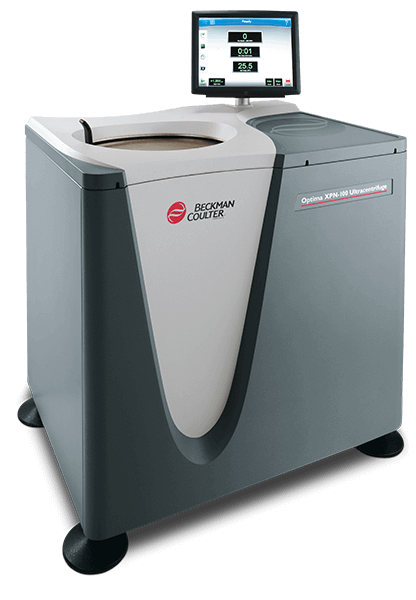
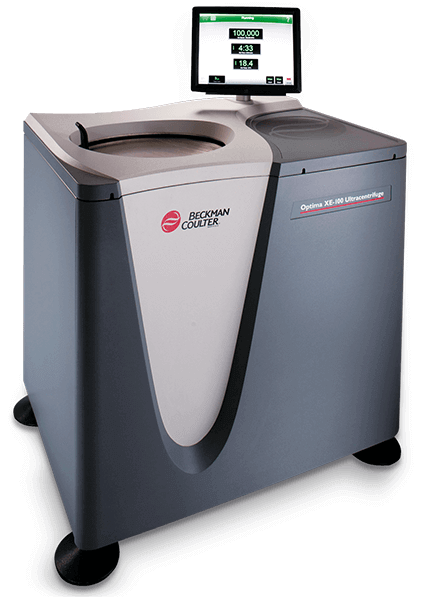
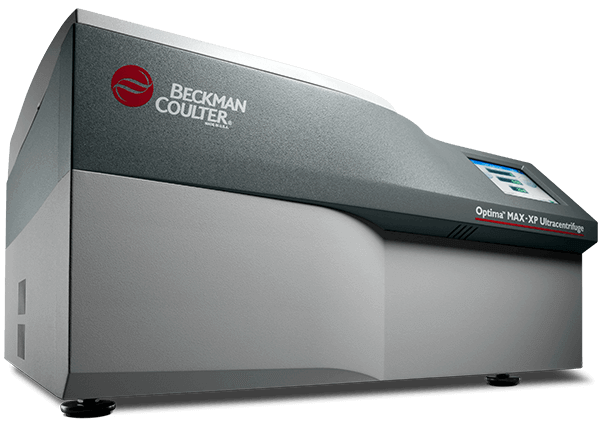
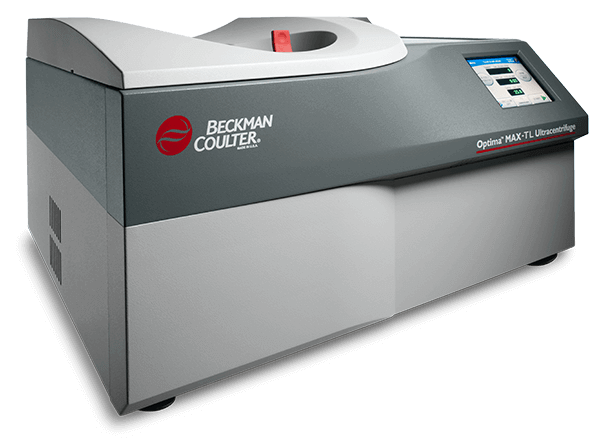
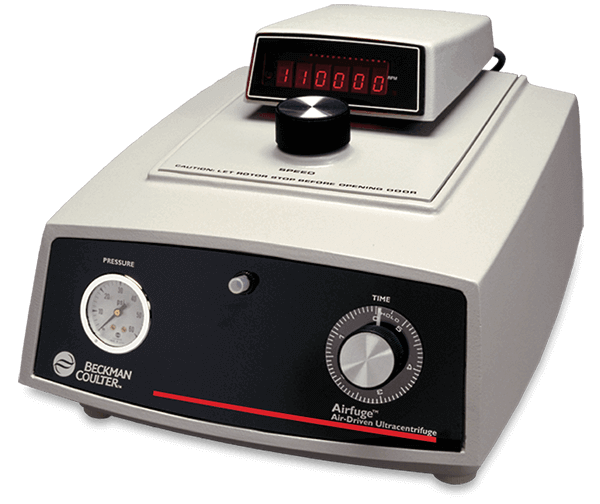
벡크만쿨터는 1947년에 최초로 초고속원심분리기(Ultracentrifuge)를 상용화하였습니다. 그 이후 벡크만쿨터의 뛰어난 초고속 원심분리기 제품 라인은 유용성을 유지하면서도 놀라운 속도와 정교함을 달성했습니다.
FAQ on Ultracentrifuges
What are the most common applications of ultracentrifugation?
Ultracentrifugation is commonly used in biopharmaceutical research, virology, molecular biology, proteomics, and nanotechnology. Typical applications include viral vector purification, extracellular vesicle isolation, density gradient centrifugation, protein analysis, and nanoparticle characterization.
How fast does an ultracentrifuge spin?
Depending on the system and rotor configuration, ultracentrifuges can operate at speeds exceeding 100,000 RPM and generate centrifugal forces greater than 800,000 × g. These conditions allow researchers to separate microscopic particles with exceptional precision and reproducibility.
What is an ultracentrifuge?
An ultracentrifuge is a laboratory instrument that spins samples at extremely high speeds, often exceeding 100,000 RPM, to generate powerful centrifugal forces. These forces enable the separation of subcellular particles, viruses, proteins, nucleic acids, extracellular vesicles, and nanoparticles that cannot be effectively isolated using conventional centrifuges.
What is the difference between a centrifuge and an ultracentrifuge?
The primary difference is speed and centrifugal force. Standard laboratory centrifuges are used for routine sample preparation, while ultracentrifuges achieve significantly higher rotational speeds and relative centrifugal forces (RCF). This makes ultracentrifuges suitable for separating very small particles such as viruses, ribosomes, proteins, and lipoproteins.
