

원심분리 밀도구배 시약
OptiMATE Cesium Chloride & Iodixanol
밀도 구배 원심분리용으로 개발된 시약으로, 다양한 세포 유형, 세포 내 입자(예: 플라스미드 DNA) 및 바이러스 분리에 적합합니다. 벡크만쿨터 라이프사이언스의 고품질 시약은 멸균 상태이며 독소레벨이 낮아(≤ 1 EU/mL) 현행우수제조관리기준(cGMP) 워크플로우를 지원합니다.
밀도 구배 원심분리는 생화학, 분자 생물학 및 기타 분야에서 밀도 구배를 형성하는 물질에서 부력 밀도 또는 침강 계수를 기준으로 입자 또는 분자를 분리하는 데 사용되는 기술입니다.

원심분리 시약 주문
어플리케이션

생체 분자 분리
복소수 혼합물에서 DNA, RNA, 단백질과 같은 생체 분자를 분리합니다.

바이러스 정제
비어 있는 캡시드, 부분적으로 채워진 캡시드, 완전히 채워진 캡시드, 초과 채워진 캡시드를 포함하여 바이러스 및 바이러스 매개체 캡시드 유형을 정제합니다.

세포 내 조직 분리
핵, 미토콘드리아, 리소좀, 세포막과 같은 세포 소기관을 분리합니다.

세포 분별
세포를 분획하여 이질적인 샘플 내에서 별개의 세포 집단을 연구할 수 있습니다.
| Rate Zonal | Isopycnic | Equilibrium Zonal | |
|---|---|---|---|
| 분리 기준 | 사전 형성된 밀대 구배에서 S-value (크기 및 질량)을 기준으로 물질 분리 | 자체 형성(연속) 밀도 구배에서 부력 밀도를 기준으로 물질 분리 | 사전 형성된 밀도 구배에서 부력 밀도를 기준으로 물질 분리 |
| 일반 구배 | 연속 구배 (예 : linear sucrose gradients) | 연속 구배 (예 : CsCl gradients) | 샘플은 밀도의 개별 세그먼트(또는 스텝별)로 분리됨 |
| 일반 구배 물질 | Iodixanol, Sucrose | CsCl, Iodixanol | Iodixanol (바이러스분리에 더 일반적), sucrose |
| 이점 | 유사한 S-value를 갖는 물질에 대한 고분해능 속도 기반 분리 | 분해능이 가장 높은 밀도별 분리 | 밀도별 원스텝 정제 및 농축 |
 |
 |
 |


Related Products
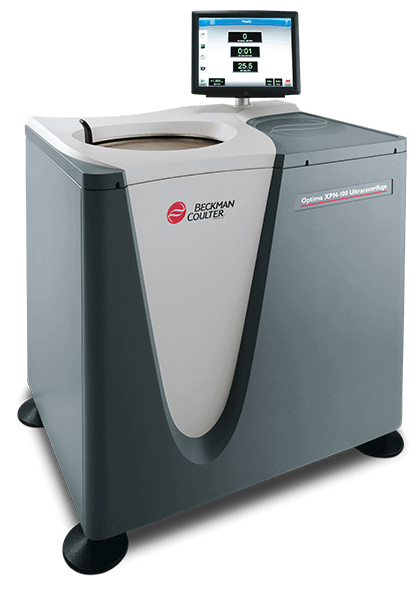
Optima XPN-100
Discover the Optima XPN-100 ultracentrifuge—engineered for advanced performance, user-friendly controls, and enhanced productivity. Explore specs & details.

Optima™ Max-XP Tabletop Ultracentrifuge
Optima™ Max-XP Tabletop Ultracentrifuge delivers rapid, high-speed separations with advanced software, safety features, and flexible capacity. Shop now.

VTi-50.1 Vertical-Angle Rotor
Purpose-built for Optima Series ultracentrifuges, the VTi 50.1 rotor helps you produce more in less time with rapid density gradient separations. Its short pathlength enables faster run times at high resolution, while the durable rotor structure enables higher density applications without de-rating speed.


기술문서
FAQ on Density Gradient Media
How do I decide between OptiMATE cesium chloride and iodixanol?
OptiMATE reagents are highly flexible and can be used for both step or linear (continuous) gradients to purify a variety of sample types. Cesium chloride is an ionic salt known for its high hygroscopicity, which results in low-viscosity solutions. It is commonly used in the purification of viruses and nucleic acids. In contrast, iodixanol is a non-ionic, highly viscous substance that is often gentler on particles with lipid membranes, such as cells and extracellular vesicles.
How should OptiMATE reagents be stored?
Since the OptiMATE reagents are highly concentrated, both solutions should be stored at room temperature (20 °C).
How do I dispose of the reagents?
OptiMATE reagents should not be flushed down the drain. Cesium chloride and iodixanol solutions should be disposed of at an approved hazardous waste disposal plant according to your organization's waste disposal plan.
How long do the reagents last from their date of manufacture?
The density gradient media have a shelf life of 18 months from date of manufacture.

