
OptiMATE CsCl is a prepared solution of CsCl with a density of 1.784 ± 0.014 g/mL, reducing the manual preparation of powder dilution and allowing you to always have the same starting concentration.
Iodixanol Gradients—Optimized for Modern Biopharma Workflows
Published: 10월 22, 2026
Key Takeaways
- Widely used in viral vector and AAV purification workflows.
- Maintains near iso-osmotic conditions that help protect sensitive biological particles.
- Supports extracellular vesicle and nanoparticle applications.
- Commonly used in step-gradient centrifugation workflows.
- Alternative media may be preferred for low-cost protein fractionation or the highest-density separations.
What Is an Iodixanol Gradient?
An iodixanol gradient is a density gradient medium used to separate biological particles according to their physical properties during centrifugation. Because iodixanol maintains near iso-osmotic conditions across a broad density range, it is commonly used for viral vectors, extracellular vesicles, lipid nanoparticles, and other sensitive biological samples where particle integrity must be preserved.
When Should You Use an Iodixanol Gradient?
Iodixanol gradients are particularly useful when separating delicate biological particles that require both effective purification and preservation of biological integrity. They are widely used throughout viral vector development, biopharmaceutical research, and advanced characterization workflows.
Typical Applications:
-
AAV Purification
Purify adeno-associated viral vectors while maintaining particle integrity and recovery.
-
Viral Vector Purification
Separate viral particles from impurities and process-related contaminants.
-
Extracellular Vesicle Isolation
Recover extracellular vesicles from complex biological samples while preserving functionality.
-
Lipid Nanoparticle (LNP) Characterization
Support density-based characterization of LNP formulations and preparations.
-
Cell Therapy Research
Enable separation workflows involving sensitive biological materials and advanced therapeutic research.
-
Sensitive Biological Samples
Help maintain sample integrity during density gradient centrifugation.
Advantages and Limitations of Iodixanol Gradients
Iodixanol combines strong separation performance with biological compatibility, making it one of the most widely adopted gradient media in modern viral vector workflows. However, cost, optimization requirements, and separation objectives should be considered when selecting a gradient medium.
Advantages
- Maintains near iso-osmotic conditions
- Compatible with delicate biological samples
- Effective for step gradients
- Widely used for viral vector purification
Limitations
- Higher reagent cost than sucrose
- May require workflow optimization
- May not provide the highest density resolution for certain applications
When Is Iodixanol Not the Best Choice?
Although iodixanol is highly effective for viral vector, extracellular vesicle, and nanoparticle workflows, other density gradient media may be more appropriate when cost, workflow simplicity, or maximum density resolution are the primary requirements.
Consider Alternative Media When...
- Simple protein fractionation is the primary goal.
- Lower-cost gradient media provide sufficient separation performance.
- Very high-density nucleic acid separations are required.
- Maximum density resolution is the priority.
Explore Related Gradient Media
OptiMATE Gradient Reagents are designed to simplify density gradient preparation workflows by providing ready-to-use, cGMP-supporting formulations for common gradient applications. For laboratories performing routine density gradient centrifugation, standardized reagents can help improve consistency while reducing preparation time.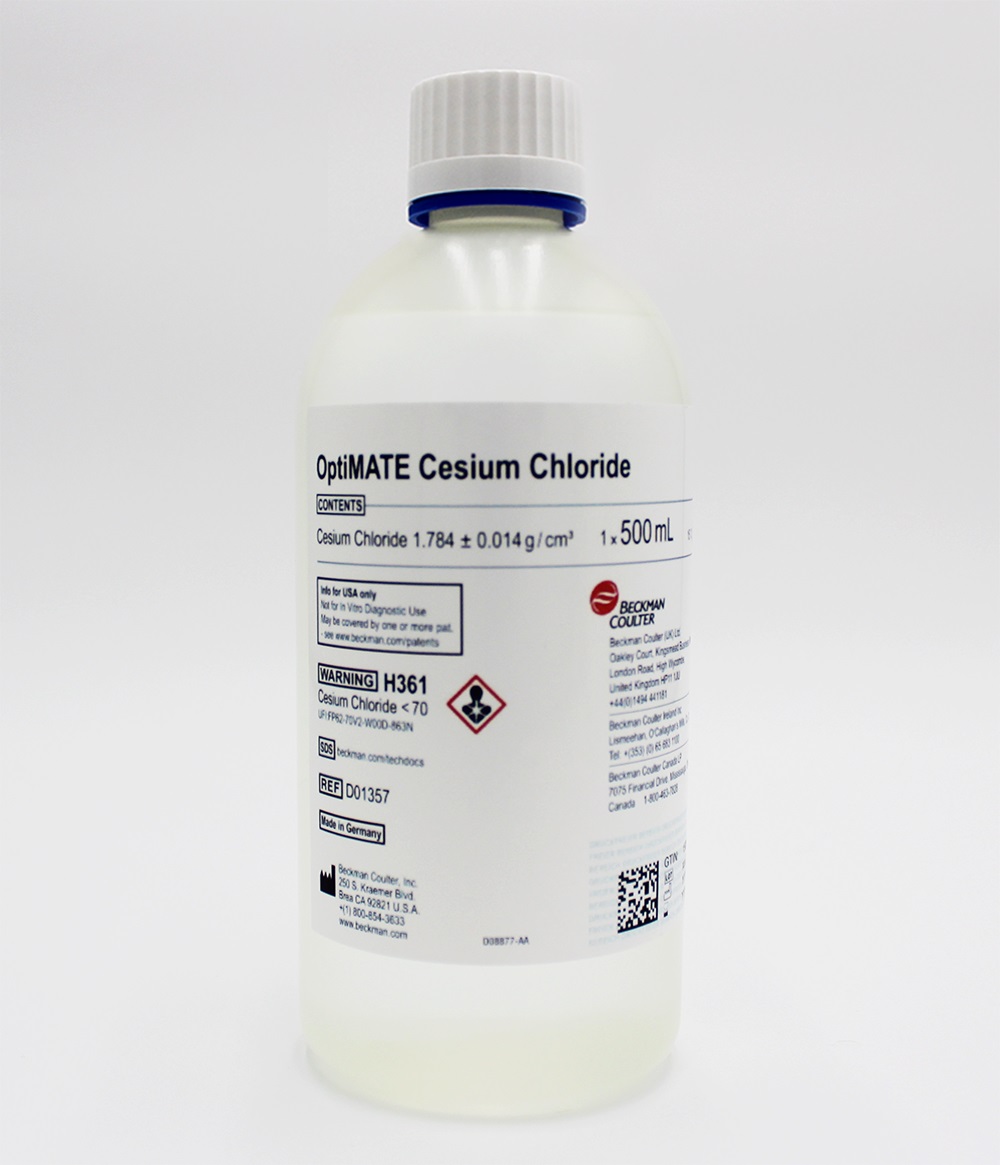
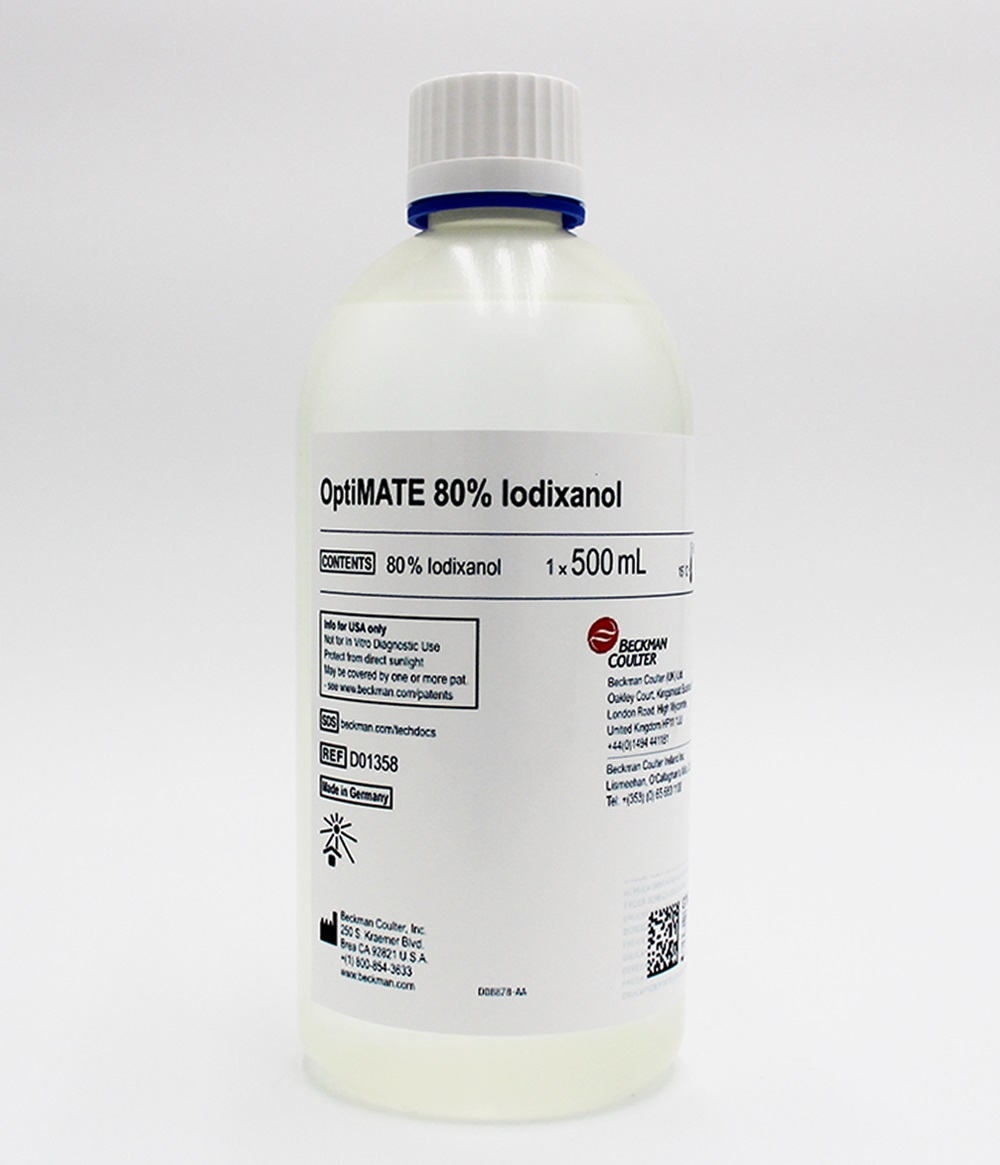
OptiMATE iodixanol is the highest on-market concentration at 80% w/v, enabling you to increase your sample per tube and decrease your bottle-related waste.
Related Resources
FAQ about Iodixanol Gradients
What is an iodixanol gradient?
An iodixanol gradient is a density gradient used to separate biological particles during centrifugation. Because iodixanol maintains near iso-osmotic conditions across a broad density range, it is particularly suitable for AAVs, viral vectors, extracellular vesicles, lipid nanoparticles, and other sensitive biological samples.
Why is iodixanol used for AAV purification?
Iodixanol provides density-based separation while helping preserve the integrity of sensitive viral particles. AAV purification workflows commonly use iodixanol step gradients to separate viral particles from cellular debris and process-related impurities before downstream analysis.
What are the advantages of iodixanol gradients for sensitive biological samples?
Iodixanol maintains near iso-osmotic conditions, is compatible with delicate biological samples, and works effectively in step gradients. This combination of separation performance and biological compatibility makes it useful for viral vectors, extracellular vesicles, nanoparticles, and related biopharmaceutical applications.
Should I use iodixanol or sucrose for viral vector purification?
Iodixanol is generally better aligned with viral vector purification because it provides strong resolution while supporting sensitive biological particles. Sucrose is more commonly associated with protein complexes, ribosomes, organelles, and general rate zonal fractionation. The final choice should reflect the target particle and required resolution.

