
For viral vectors, AAVs, extracellular vesicles, and other delicate biological samples requiring strong resolution while preserving biological activity.
Sucrose Gradients for Density Gradient Centrifugation
Published: 10월 22, 2026
Key Takeaways
- Sucrose is a well-established gradient medium used for proteins, ribosomes and organelles.
- It is particularly effective for rate zonal separations based on sedimentation rate.
- Sucrose can be used to create continuous or step gradients.
- High concentrations may expose sensitive samples to hyperosmotic conditions.
- Alternative media may be more appropriate when maximum density resolution is required.
What Is a Sucrose Gradient?
A sucrose gradient is a density gradient used in centrifugation to separate biological particles based on their sedimentation rate. Formed from increasing concentrations of sucrose, the gradient provides a controlled environment for resolving proteins, ribosomes, organelles, and other cellular components. Sucrose gradients are commonly used in rate zonal centrifugation because they are versatile, compatible with many laboratory workflows, and suitable for both continuous and step gradient formats.
When Should You Use a Sucrose Gradient?
-
Protein Complex Fractionation
Separate protein assemblies according to differences in sedimentation behavior.
-
Ribosome Profiling
Resolve ribosomal subunits, monosomes and polysomes for downstream analysis.
-
Mitochondrial Isolation
Support the fractionation and enrichment of mitochondrial material.
-
Nuclear Fractionation
Separate nuclei and related cellular fractions.
-
Polysome Analysis
Examine ribosome loading and protein synthesis activity.
Example Application:
Researchers studying protein synthesis can use sucrose gradients to separate ribosomal subunits, monosomes and polysomes. The resulting fractions can then be collected for downstream analysis, helping researchers examine ribosome assembly and translational activity.
Advantages and Limitations of Sucrose Gradients
Sucrose is a practical and flexible choice for many established workflows, but its osmotic properties and achievable resolution should be considered when working with sensitive samples or demanding density-based separations.
Advantages
- Widely used and well characterized
- Relatively gentle on biological samples
- Supports continuous and step gradients
- Effective for protein and organelle separation
- Compatible with many established protocols
Limitations
- High concentrations can produce hyperosmotic conditions
- Resolution may be lower than with some alternative media
- Some separations may require longer centrifugation times
- Not always appropriate for viral vector applications
- Very high-density separations may require another medium
When Is Sucrose Not the Best Choice?
Sucrose is a versatile and widely used density gradient medium, but it is not the best choice for every separation goal. Requirements such as higher density resolution, preservation of sensitive samples, or the need to separate particles with very similar densities may make alternative gradient media better suited to the application.
Consider a Different Medium If...
- Maximum density resolution is required.
- Full and empty viral capsids must be separated.
- Samples are particularly sensitive to osmotic stress.
- The workflow requires very high-density separation.
Choosing an Alternative Gradient Medium
OptiMATE Gradient Reagents are designed to simplify density gradient preparation workflows by providing ready-to-use, cGMP-supporting formulations for common gradient applications. For laboratories performing routine density gradient centrifugation, standardized reagents can help improve consistency while reducing preparation time.
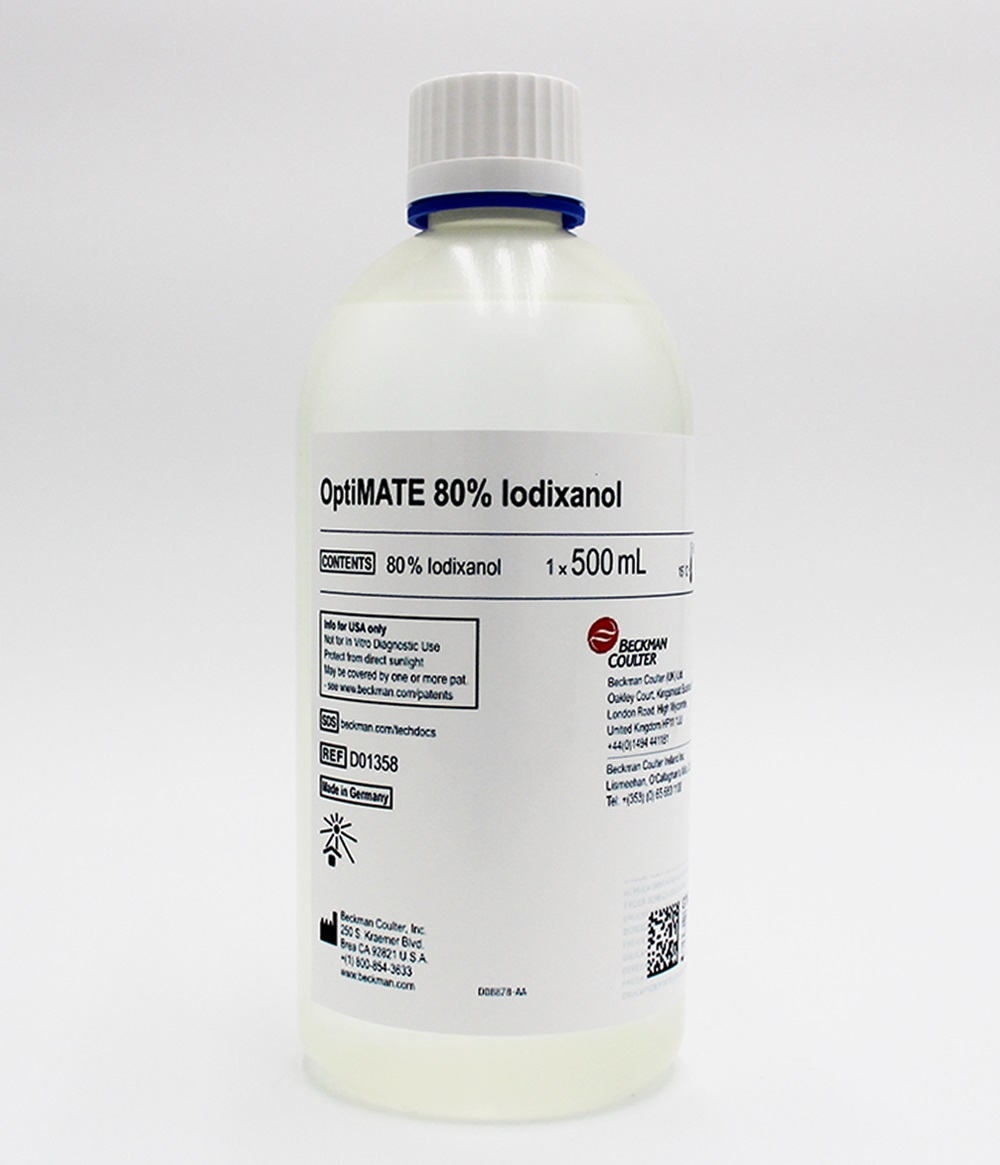
Iodixanol
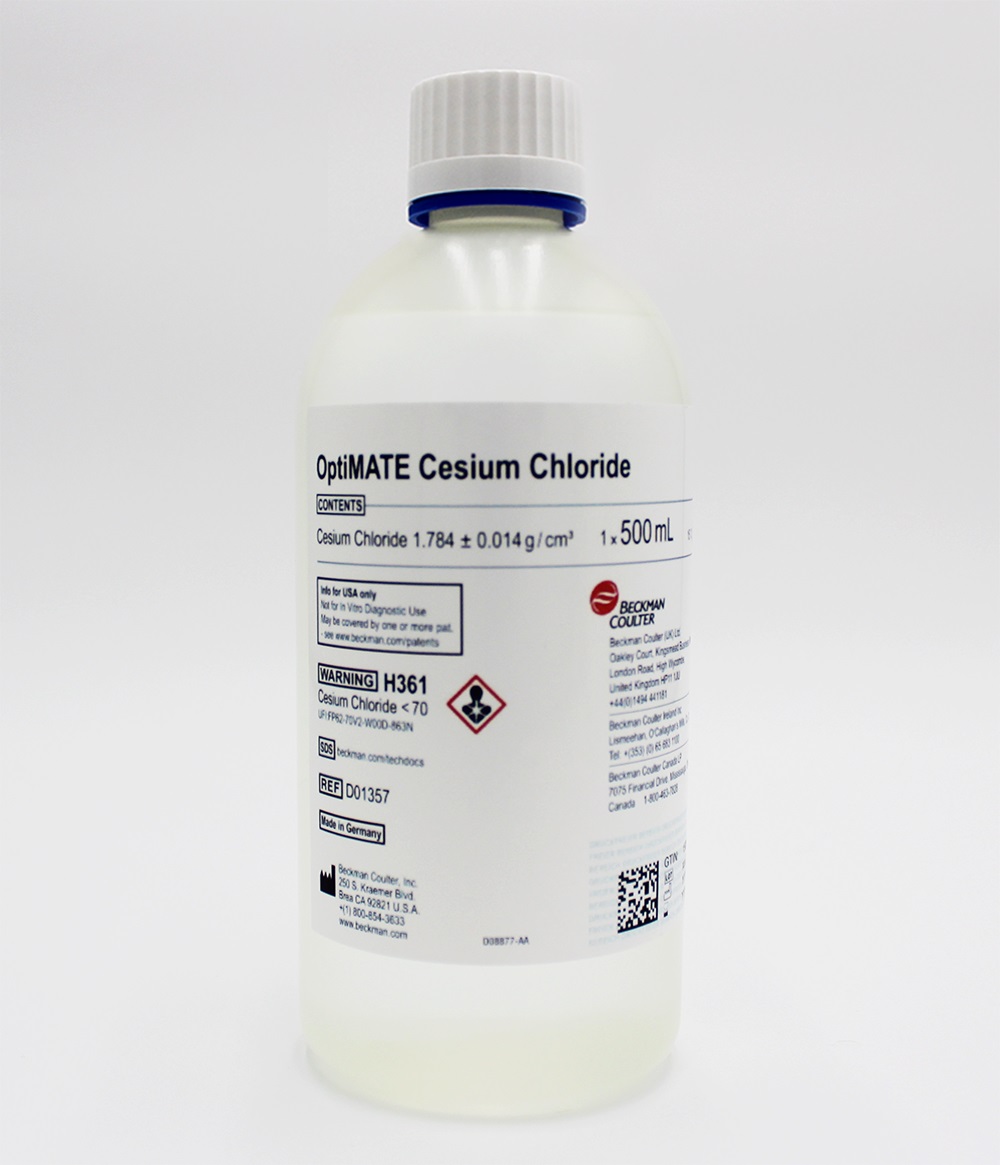
Cesium Chloride (CsCl)
For high-resolution nucleic acid purification, viral particle characterization, and density-based separations such as full-versus-empty capsid analysis.
Related Resources
FAQ about Sucrose Gradients
What is a sucrose gradient?
A sucrose gradient is a density gradient formed from increasing concentrations of sucrose in a centrifuge tube. During centrifugation, particles move through the gradient and separate according to their sedimentation behavior. Sucrose gradients can be prepared as continuous or step gradients.
What are sucrose gradients used for?
Sucrose gradients are commonly used for protein-complex fractionation, ribosome profiling, polysome analysis, mitochondrial isolation, and nuclear fractionation. They are particularly useful in rate zonal workflows that separate biological particles according to differences in sedimentation rate.
Why is sucrose used for protein fractionation?
Sucrose is well characterized, relatively gentle on biological samples, and compatible with many established laboratory protocols. It supports continuous and step gradients and is effective for separating protein complexes with different sedimentation properties.
What is the difference between a sucrose cushion and a sucrose gradient?
A sucrose cushion is a dense sucrose layer through which particles sediment, typically supporting concentration or separation from lighter contaminants. A sucrose gradient contains increasing sucrose concentrations and resolves particles into multiple zones according to their sedimentation behavior. The gradient therefore provides more fractionation than a single cushion.
How do you prepare a sucrose density gradient?
A sucrose density gradient is typically prepared by layering solutions of increasing sucrose concentration (e.g., 10% to 60%) or by generating a continuous gradient using a gradient maker.
Careful handling is essential to avoid mixing layers, as even minor disturbances can reduce separation accuracy.
Can density gradient centrifugation separate proteins?
Yes, density gradient centrifugation can separate proteins, particularly when they form complexes or aggregates with distinct sedimentation properties.
However, for many protein purification workflows, it is often combined with other techniques such as chromatography to improve specificity.

