
AMPure XP 비드 기반 시약
어플리케이션: PCR 정제, DNA 클린업, NGS 클린업
비드 기반 차세대 시퀀싱(NGS) 클린업의 골드 스탠다드로, 실제로 신뢰할 수 있는 염기서열 분석 업체에서 제공하는 200개 이상의 라이브러리 구성 키트 제조업체에서 권장되고 있습니다.

실험 속도를 높일 수 있게 지원해드립니다. 문의하기 →

시약을 자동으로 배송 받으면 시간을 절약할 수 있습니다. 자세히 알아보기 →

AMPure XP 시약 주문
Explore PCR Models
협력의 강점: OEM 파트너가 되어보세요.자세히 알아보기 →
개요
AMPure XP 비드 기반 시약은 염기서열 분석, qPCR/ddPCR/PCR, 마이크로어레이 및 기타 효소 반응과 같은 다양한 게놈 응용 분야에서 DNA 클린업 단계를 수행하기 위해 개발되었습니다. 이는 상자성 비드를 사용하여 핵산을 유형과 크기별로 선택적으로 결합하는 검증된SPRI 기술을 기반으로 합니다.

DNA를 사용하여 작업

100bp를 초과하는 높은 앰플리콘 회수율

결합되지 않은 dNTP, 프라이머, 프라이머 다이머, 염류 및 기타 오염 물질의 효율적인 제거

예측 가능하고 일관된 크기 선택
회수, 일관성 및 속도를 극대화하여 전체 NGS 워크플로우를 촉진하는 AMPure XP 시약은 오늘날 게놈 응용의 엄격한 요구 사항을 충족하고 중요한 유전 정보의 손실 위험을 최소화합니다. 그렇기 때문에 Illumina, Oxford Nanopore Technologies, PacBio 및 Thermo Scientific과 같이 업계에서 가장 신뢰할 수 있는 염기서열 분석 업체의 키트를 포함하여 200개 이상의 NGS 라이브러리 준비 키트에서 종종 유일한 클린업 옵션으로 제안되고 있습니다.
워크플로우 및 프로토콜
AMPure XP 수동 워크플로우

- DNA를 자성 비드에 결합
- 비드를 오염 물질에서 분리
- 자성 비드를 70% 에탄올로 세척하여 오염 물질 제거
- 자성 비드에서 DNA 용출
- 새 플레이트로 이동
AMPure XP 비드 기반 시약은 배치 크기 또는 전체 처리량에 따라 수동으로 사용하거나 자동 분주기서 자동으로 사용할 수 있습니다.
이 표에서 48, 96 및 4 x 96 AMPure XP 클린업을 수행하는 데 필요한 예상 작업 시간과 총 시간(분)을 확인할 수 있습니다.
Biomek i5 Multichannel 96 Genomics Workstation에서 AMPure XP PCR 정제 시스템의 자동화에 대한 자세한 내용은 어플리케이션 노트를 참조하십시오.
| 수동 워크플로우 | 자동 워크플로우 | |||
|---|---|---|---|---|
| 배치 크기 | 48 | 작업 시간 | 25 | 5 |
| 총 시간 | 25 | 22 | ||
| 96 | 작업 시간 | 30 | 5 | |
| 총 시간 | 30 | 22 | ||
| 4 x 96 | 작업 시간 | NR | 10 | |
| 총 시간 | NR | 46 | ||
NR = 권장하지 않음(Not Recommended)
사양
| 핵산 인풋 | PCR 산물, 단편화된 DNA |
| 아웃풋 | DNA |
| 회수 | AMPure XP 시약은 PCR 산물 100bp< 정제를 위해 개발되었습니다. 정상 회수 범위는 60~90%이며, 일반적으로 70~90% 사이입니다. |
| 비드 비율 | 클린업 시 1.8배.자세히 알아보기 |
| 형식 | 액체 |
| 볼륨 | 5 mL, 60 mL, 또는 450 mL |
| 어플리케이션 | PCR 정제, DNA 클린업, NGS 클린업 |
| 처리 모드 | 자동 또는 수동 |
| 기술 | SPRI 상자성 비드 기반 기술 |
| 보관 | 4 °C |
How to Automate AMPure XP DNA Cleanup
When compared to manual operations, the AMPure XP beads automated on Biomek liquid handlers provides:
- Reduced hands-on time and increased throughput
- Option to run the method end-to-end with only setup and tear-down touch points
- Reduction in pipetting errors
- Standardized workflow for improved results
- Quick implementation with demonstrated methods
To learn more about automation of the AMPure XP beads on the Biomek i5 Nucleic Acid Cleanup Solution, read our method overview.
To discuss the feasibility to automate the AMPure XP DNA cleanup in your lab with one of our experts complete this form.


자주 묻는 질문
Although size selection protocols developed by other organizations do exist, we cannot guarantee performance or support this application. We suggest using the SPRIselect reagent, as it is developed specifically for size selection purposes. Visit this page to learn more.
The main difference between the SPRIselect and AMPure XP bead-based reagents is the intended use. The SPRIselect reagents are designed and validated for accurate and consistent DNA size selection from lot to lot, while the AMPure XP reagents are primarily validated for PCR purification and NGS cleanup. Learn more on this page.
The reagent will bind DNA and RNA; however, the RNAClean XP reagent is manufactured under RNase-free conditions and is QC tested to be RNase free whereas the AMPure XP reagent is not.
The AMPure XP reagent is manufactured and tested for the storage temperature indicated on the bottle and we can guarantee performance only at that temperature.
No. Any beads carried over to the final destination plate are inert in downstream enzymatic reactions.
Yes, but the recovery will decrease with a decrease in elution volume. In addition, if the beads cannot reach the magnet during the separation it may be necessary to leave a portion of the eluate behind if bead carryover must be avoided. Be sure to resuspend the beads fully in the elution buffer.
The binding capacity of the beads is so high that they cannot be exceeded with any sample type. It is possible to bind at least 7 μg of nucleic acid to 1 μL AMPure XP reagent, however the sample will become so viscous that it is difficult to pipette the sample.
The recovery depends on the fragment size, sample volume, sample concentration, elution volume and some other factors. Under ideal conditions recovery can be up to 90%, but under sub-optimal it can be as low as 60%.
Our beads rely upon a multifactorial equilibrium chemistry for binding, washing, and elution. Binding buffer components facilitate nucleic acid immobilization at functional-group-rich binding sites on the beads and the wash steps preserve this delicate equilibrium while solubilizing contaminants to allow for their removal. Elution disrupts this balance and re-solubilizes nucleic acids to allow for their separation from the beads.
Learn More →
A dry step can be incorporated after the removal of the last ethanol wash and before the addition of the elution buffer. For purification of very large fragments, such as gDNA, a dry step is not recommended because recovery would be decreased. Fragments up to 40 kb have been known to tolerate a dry step.
Find Beckman Coulter Life Sciences AMPure XP technical documents here.
질문에 대한 답을 찾지 못하셨습니까? 전문가와 상담해 보세요..
인용
AMPure XP 시약은 Google 학술 검색의 52,000개 이상의 출판물에서 인용되었으며 Science, Nature, PNAS의 기사에서도 언급되었습니다. 두 가지 주요 기사는 다음과 같습니다.

Greenwald WW et al. Subtle changes in chromatin loop contact propensity are associated with differential gene regulation and expression. Nat Commun. 2019 Mar 5;10(1):1054. doi: 10.1038/s41467-019-08940-5.
Peffers MJ et al. Transcriptomic profiling of cartilage ageing. Genom Data. 2014 Mar 19;2:27-8. doi: 10.1016/j.gdata.2014.03.001.
Frequently Used With
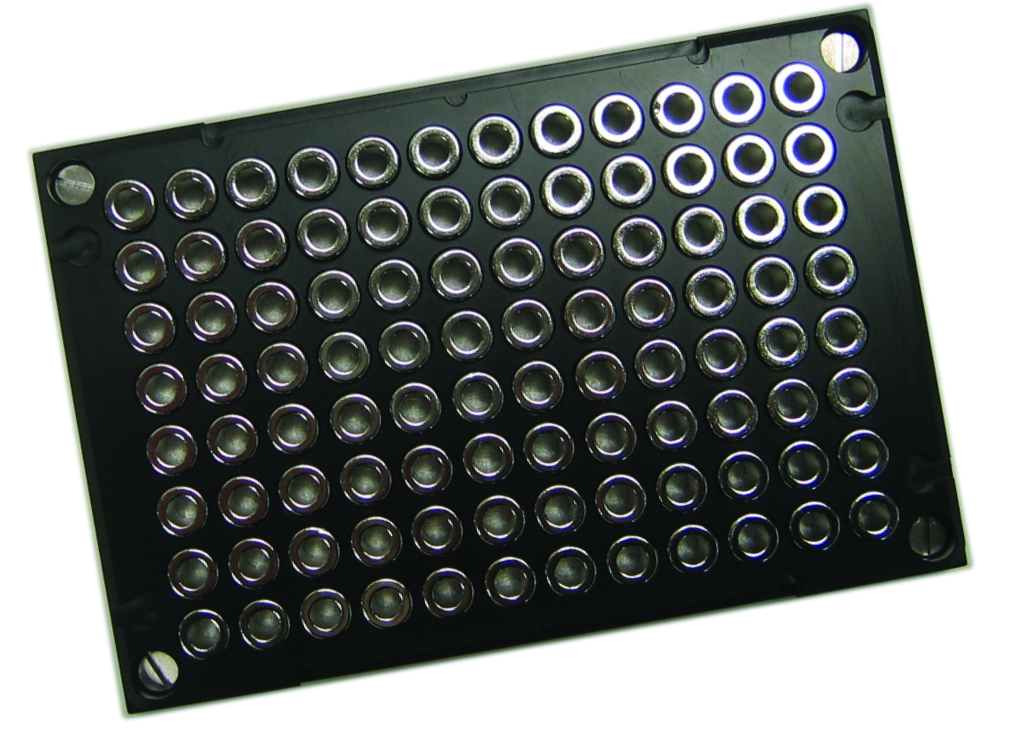
SPRIPlate, 96-well, Super Magnet
Specifically designed for SPRI reagent kits by Beckman Coulter. Has not been validated for use with the CleanSEQ or CosMCPrep reagent systems.

SPRIStand, Tubes
Designed for lower throughput users. The 6-position stand is compatible with 1.5 mL, 1.7 mL and 2.0 mL microcentrifuge tubes.

SPRIselect 비드 기반 시약
SPRIselect beads utilize SPRI technology for DNA size selection and cleanup and to deliver superior quality DNA that requires no centrifugation or filtration.

기술문서
Products and demonstrated applications are not intended or validated for use in diagnostic procedures.
